
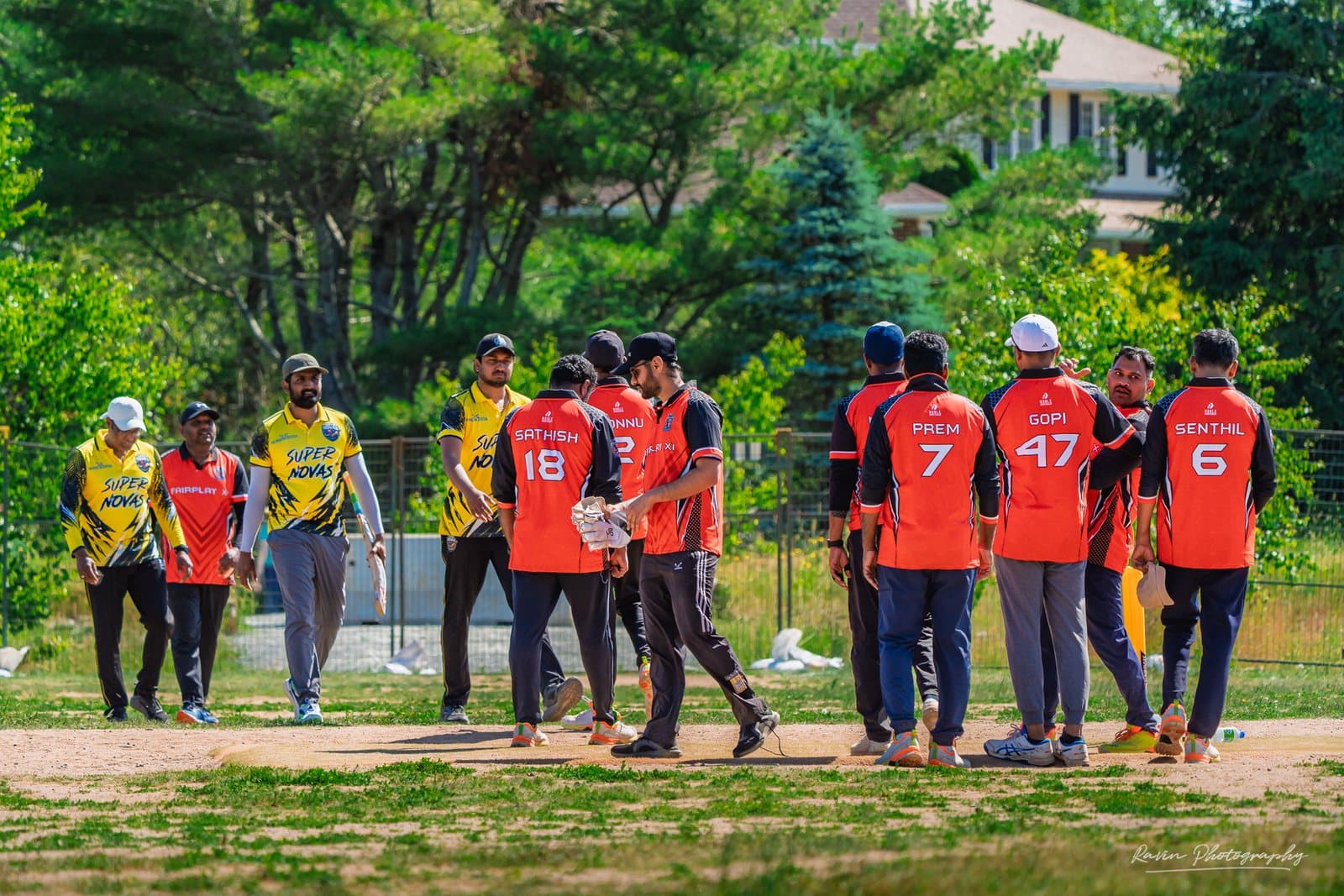
Cricket is a strange sport to photograph. Nothing happens for twenty seconds, then everything happens in about half of one. If your camera isn't already set up right and you're not already standing in the right spot, you miss it.
Short version: shoot at 1/1000th of a second or faster, keep autofocus in continuous mode, get low, and burst through every big swing instead of trying to time one perfect frame.
Halifax has a real cricket scene most people driving past a park on a Saturday afternoon never notice. The Halifax Cricket League runs matches through the season, the Nova Scotia Cricket Association organizes the bigger tournaments, and every August long weekend the Deonarine Cup turns into one of the bigger dates on the local cricket calendar. I've been shooting a team called Super Novas this summer, and it's taught me more about sports photography than any tutorial did.
Camera settings that hold up
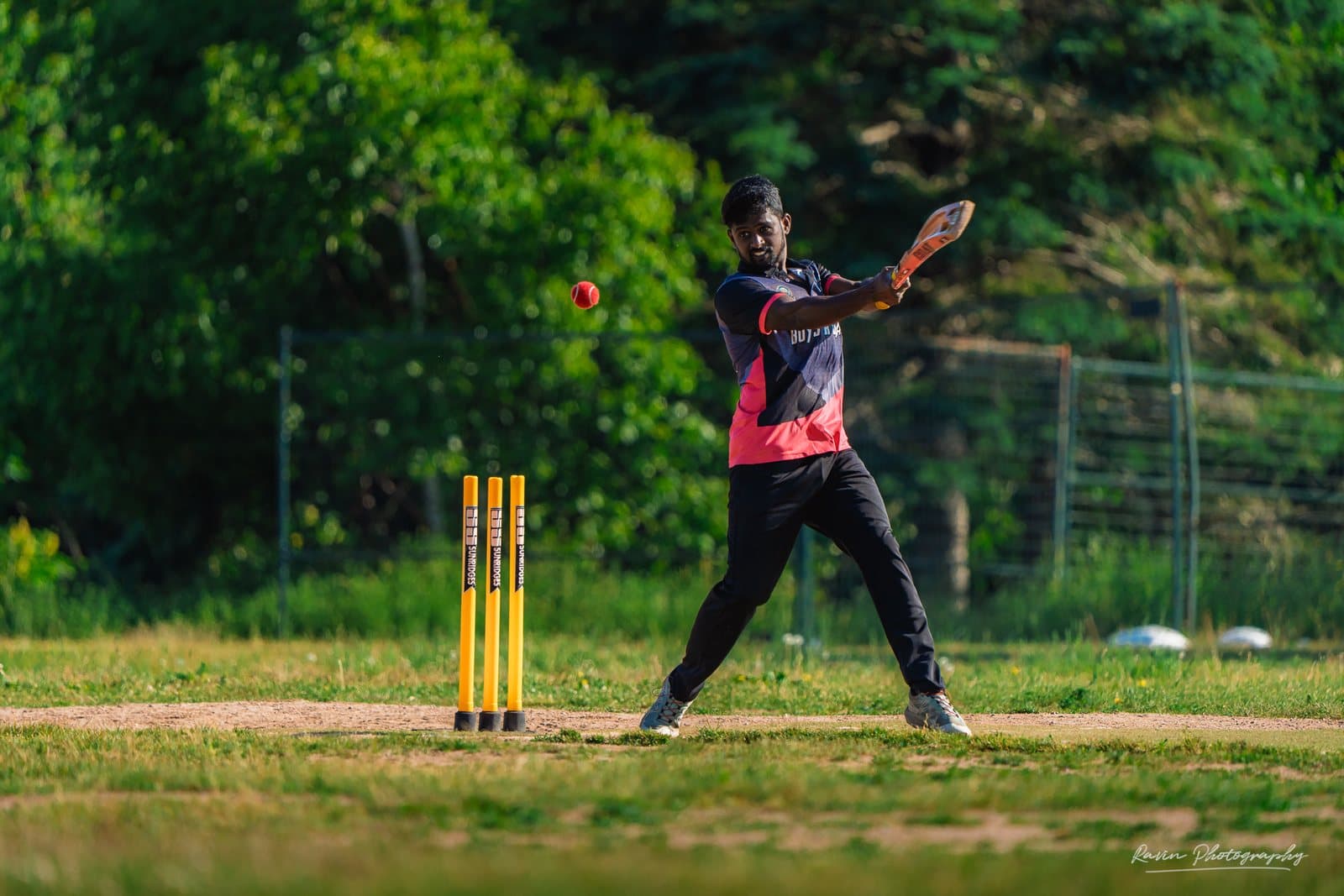
Shutter speed matters more than anything else here. 1/1000 of a second is the floor for me, and I'll go faster for a full swing. Anything slower and the bat blurs, the ball turns into a streak, and the moment is gone. I shoot this on a Sony A7 IV with the 200-600mm G Master, zoomed in most of the way from the boundary, which sits the aperture around f/6.3 whether I want it wider or not. ISO ends up around 800 to compensate, even in good daylight. A superzoom like that isn't a fast lens, so the ISO does more of the work than it would on a shorter prime.
Autofocus needs to be in continuous mode, not single-shot. A batter shifting their weight into a shot moves faster than single-point autofocus reacts to, and you end up with a sharp photo of the grass behind them instead. Burst mode isn't optional either — I shoot every big swing as a sequence, because the frame that actually looks good is rarely the one you'd have picked reacting in real time.
Where to stand
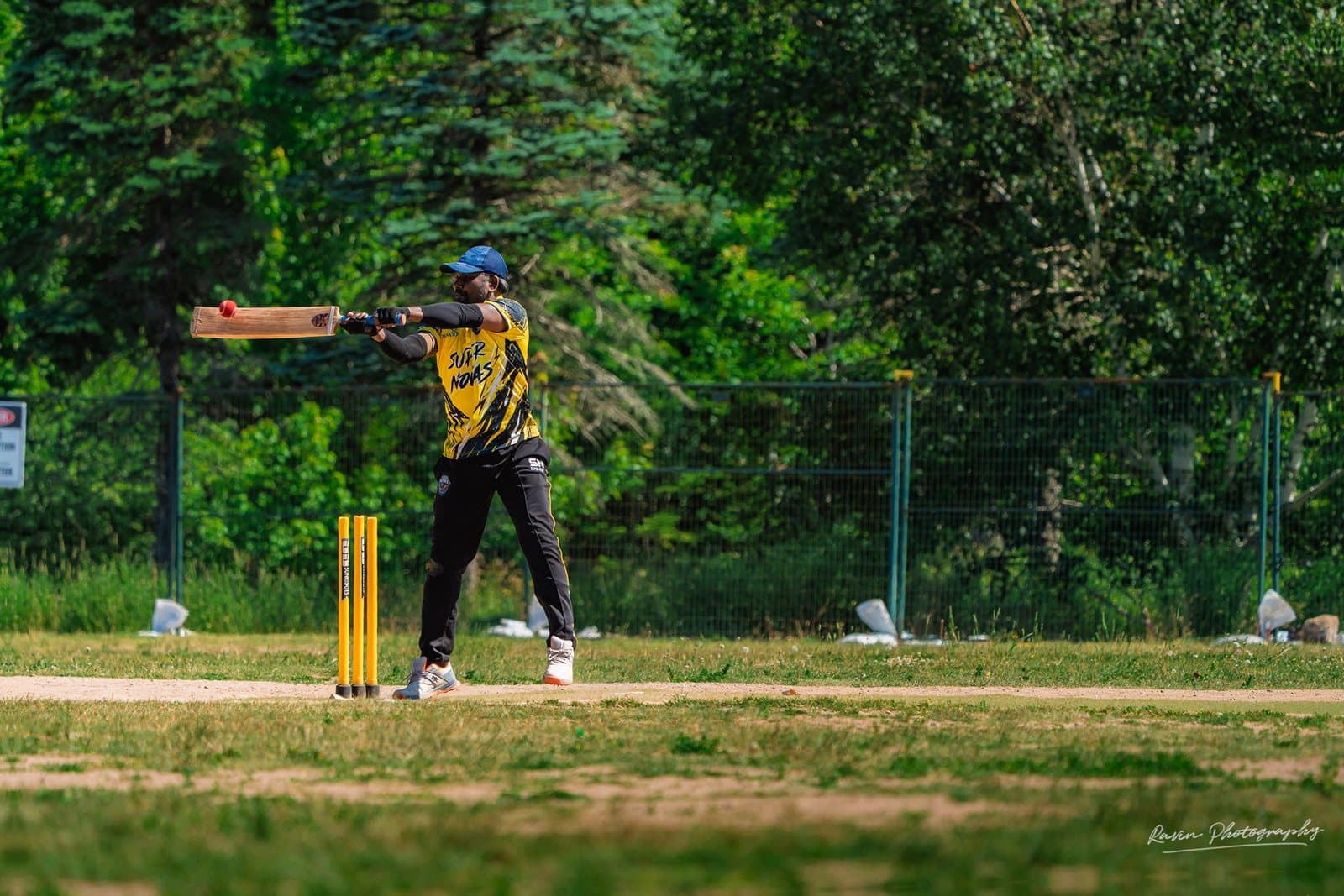
Think of the batter like the center of a clock. You want to be somewhere between 12 and 3 if they're right-handed — square enough to watch the shot develop, not so square you lose the bat and ball in the same frame. Shooting from a slight crouch instead of standing straight up changes the photo more than people expect: the batter reads taller, the swing has room to open up in frame, and you catch a face under the cap instead of a shadow across it.
Anticipating instead of reacting
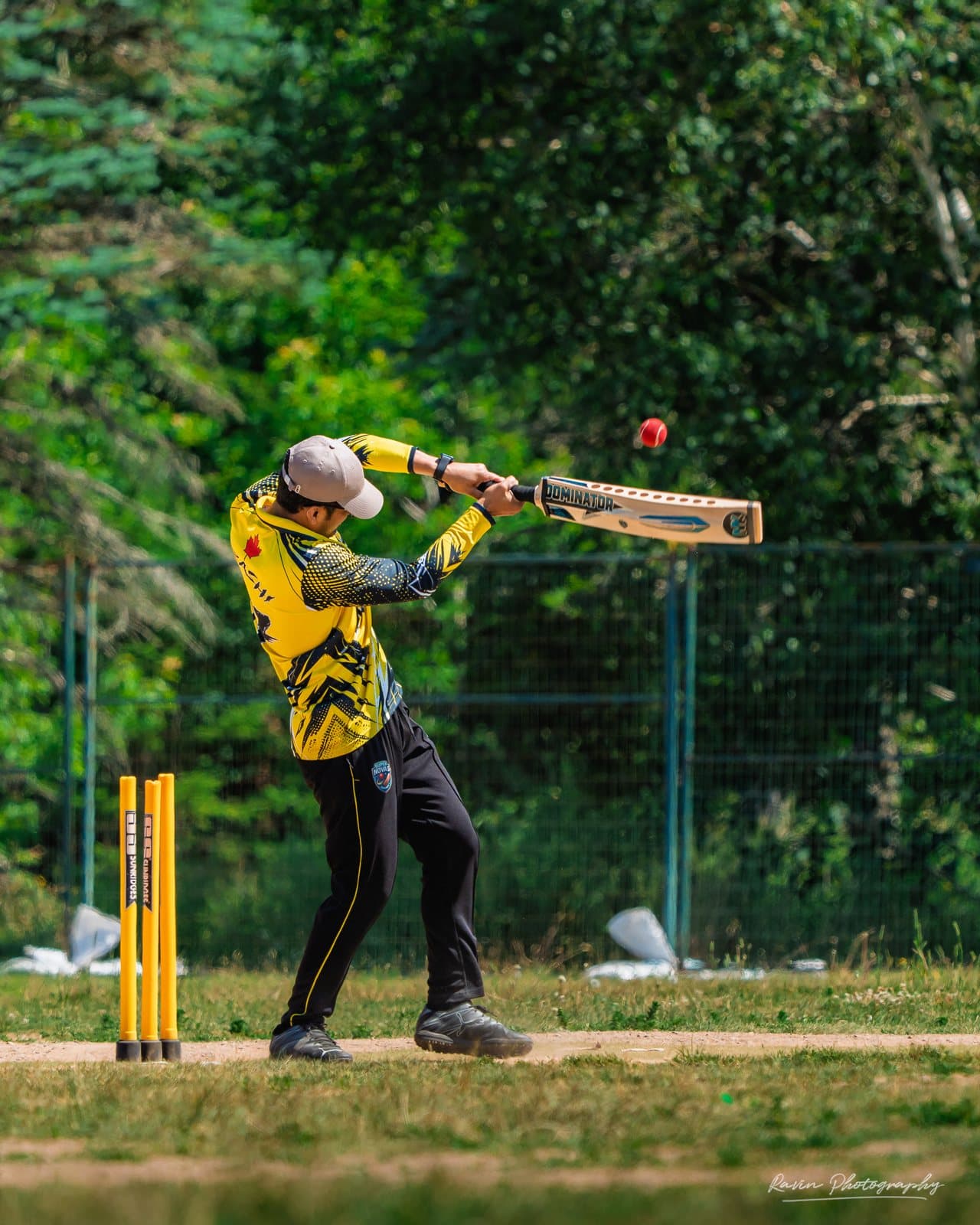
By the time you see the ball hit the bat and press the shutter, that frame is already gone. The way around this is knowing the game well enough to pre-focus on where the bowler's about to release, or on the batter's crease, before the ball is even bowled. You're not photographing what happened — you're set up for what's about to happen. That's the real skill in cricket photography, more than any camera setting.
Take more than feels reasonable
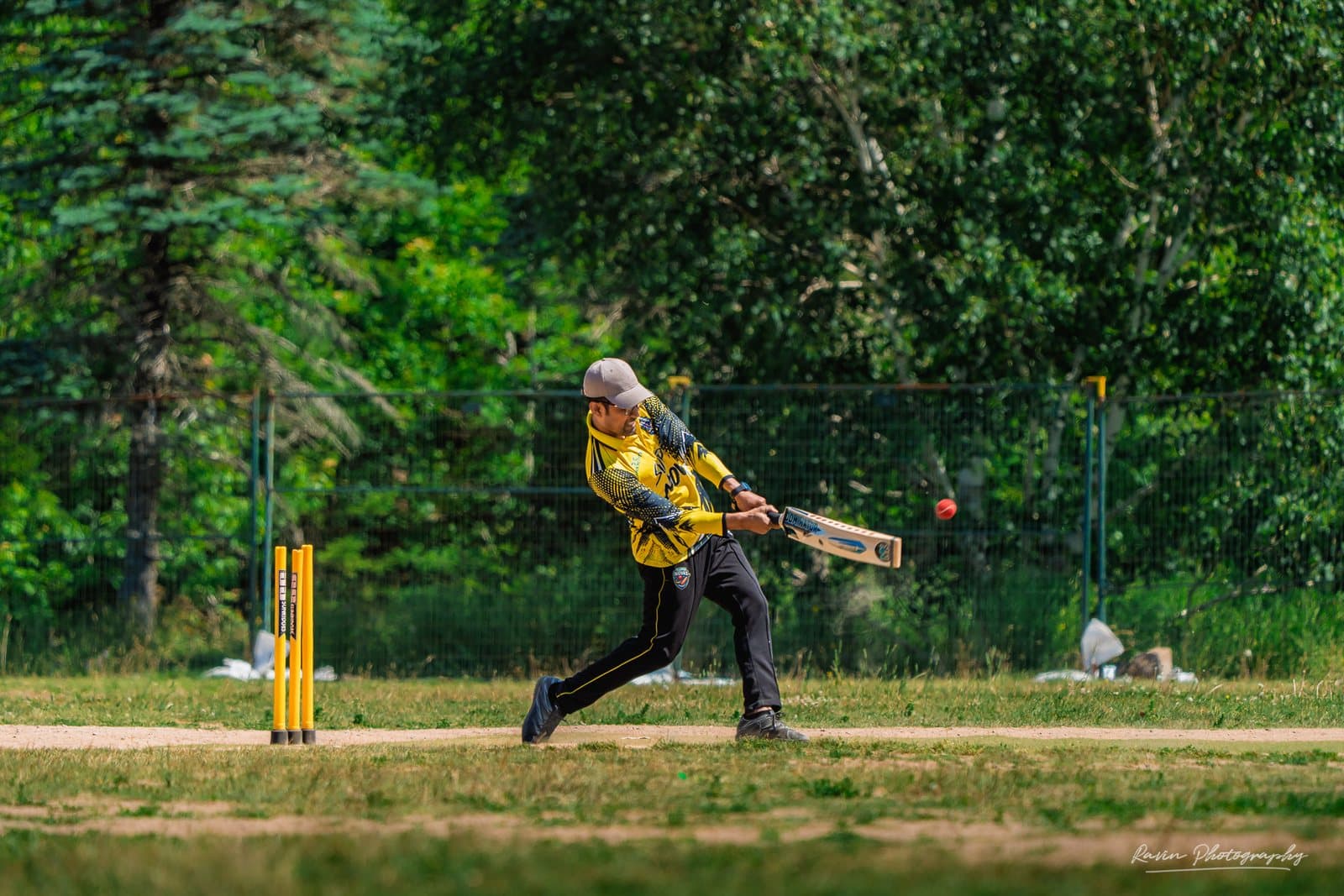
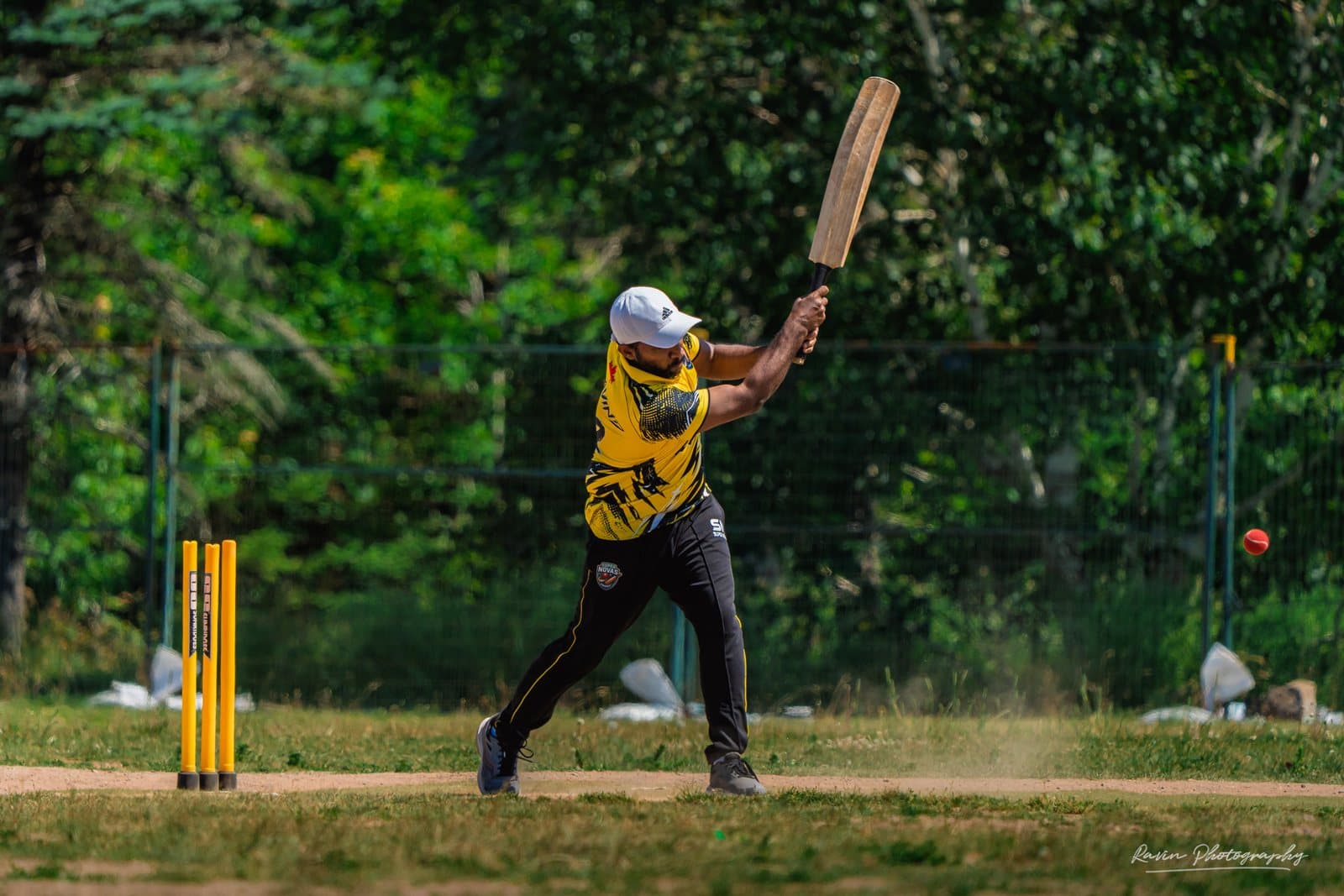
One shot, one swing, broken into frames like this. Backlift, contact, follow-through, watching it sail. If I'd only taken one frame of that swing I'd have gotten lucky, or I'd have missed it. Burst mode isn't cheating — it's accepting that you don't get to pick the right instant while it's happening. You pick it afterward, from options.
If you play or manage a local team and want a photographer who actually understands the game, get in touch — I shoot league matches and tournaments around Halifax and the Maritimes.